

More than a month has passed since Ukraine implemented regulations that made it possible to deprive the enemy of the ability to use Starlink on the territory of Ukraine. This indeed became a landmark event that influenced the course of military operations.
Various media outlets publish different news on this topic every day. Mostly optimistic and positive. But sometimes rather ambiguous as well. Which of course contributes to the emergence of certain myths. Let us try to examine the realities and assessments without speculation or emotion.
History of the issue
The topic of the enemy’s use of Starlink is actually not a new one. Back in February 2024 this issue was comprehensively covered by Volodymyr Stepanets in a publication on Mind.ua and in an interview on Radio NV.
Reports about the enemy’s use of Starlink, particularly on drones, began to appear more and more frequently. There were also cases of Russian manufacturers advertising the integration of Starlink into their drones. By the end of 2025, cases of effective use of Starlink on strike drones had become a constant and worrying element of the news.
As the further development of events showed, by the end of January 2026 the occupying forces of the aggressor state were using Starlink very systematically and on a massive scale. Sometimes even surpassing the level of saturation with this convenient satellite communication among units of the Armed Forces of Ukraine. We also wrote earlier about direct signs of this.
What happened and when
A detailed description of the chronology of events was provided in the previous review. However, some events from that chain must be considered from different angles.
At the end of January 2026, against the background of a significant increase in publications and reports about the use of Starlink on strike drones of the aggressor’s troops, certain statements were made by the newly appointed Minister of Defense of Ukraine — Mykhailo Fedorov. They concerned an appeal to SpaceX to make it impossible for Russian forces to use Starlink terminals on the territory of Ukraine.
The next step was an unannounced restriction of Starlink terminals while in motion. On January 30, starting at 08:00 in the morning, the connection to the network was simply disabled at speeds of 70 km/h and higher. Of course, this made the use of Starlink on the vast majority of drones impossible. And not only for the enemy, but also for the Defense Forces of Ukraine.
In addition to positive consequences, there were also negative ones — Starlink terminals on trains, evacuation vehicles, cars and all other moving platforms could not operate when the speed limit was exceeded. The number of drones lost by the Defense Forces of Ukraine and other direct or indirect losses was of course never disclosed. But there certainly were some losses. SkyLinker does not have the ability to disclose details, for the same reasons other sources cannot do so.
The cause of these losses can of course be considered organizational and systemic shortcomings in the prior notification of the Defense Forces of Ukraine and other structures about such events. Certain conclusions were of course drawn. Whether they are sufficient or not will be shown by time. But one of the key problems of today — Ukraine’s critical dependence on Starlink — manifested itself in full.
However, already on February 1 official statements were made about the next step — the introduction of authorization of Starlink users and equipment in order to create “whitelists”.
Of course, no clear deadlines or dates were announced for entirely understandable reasons — the “fog of war” is sometimes critically important. Accordingly, expectations regarding the start of blocking varied widely — from “any moment now” to “they will hardly manage it within a month”.
But the Ministry of Defense did not delay, and the blocking actually began on February 4 at 20:00. And again, the event became unexpected both for the enemy and for many Ukrainians. This is clearly demonstrated by the graph of the Kentik monitoring service, which shows a 75% drop in traffic volumes in the Ukrainian segment of the Starlink network.
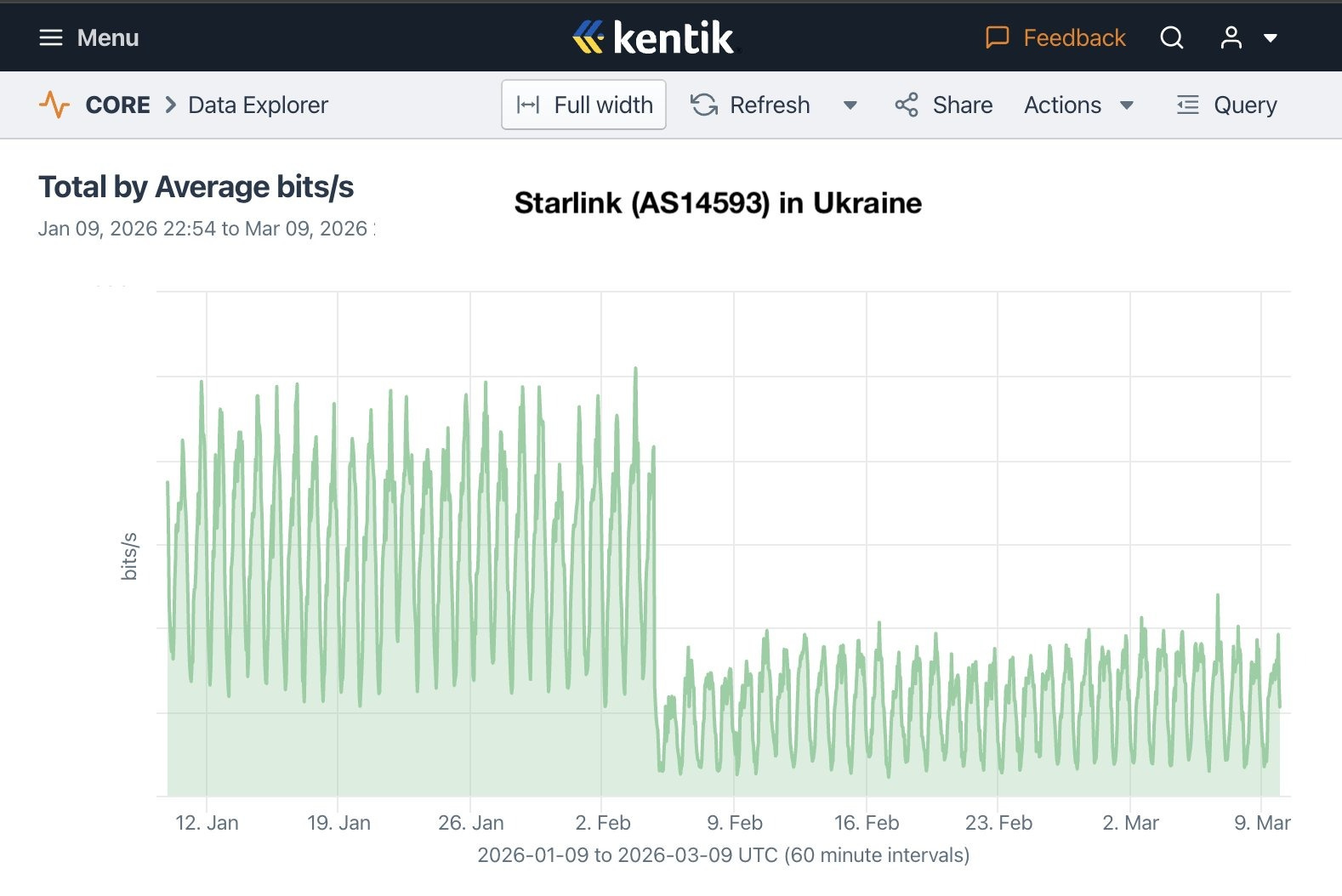
That is, such a significant drop in traffic is clear confirmation that from the moment the blocking began, the decline was not 10–15% and not even 50%. Only 25% of the total fleet of Starlink terminals remained active for a long period. Thus Ukrainian Starlink users suffered significantly from the blocking.
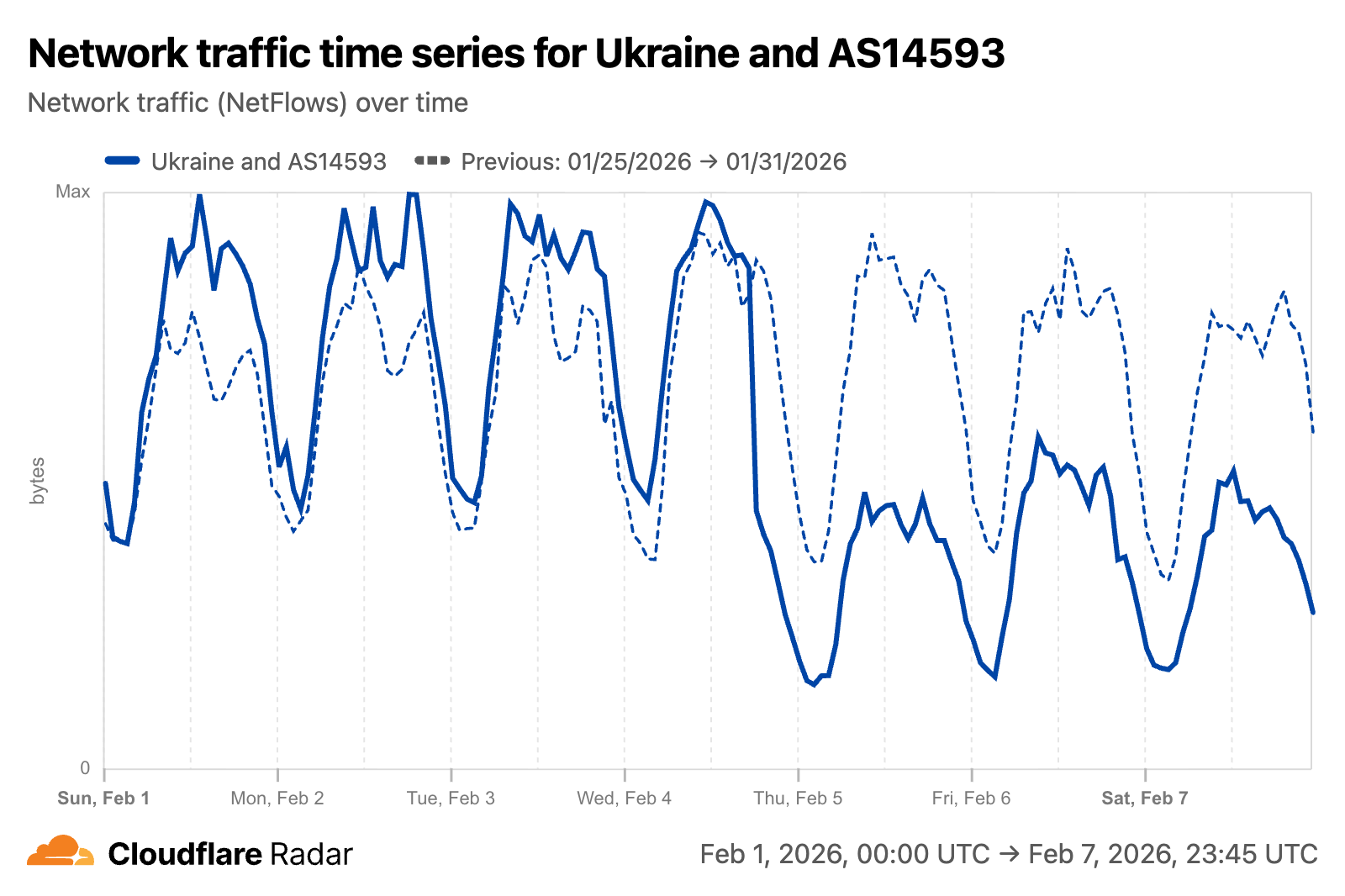
Of course, the methodology of Kentik and the coverage of the target segment may be subject to discussion and clarification. Therefore what is critically important here is the interpretation of the scale and trends. And for this, similar indicators from CloudFlare are also suitable.
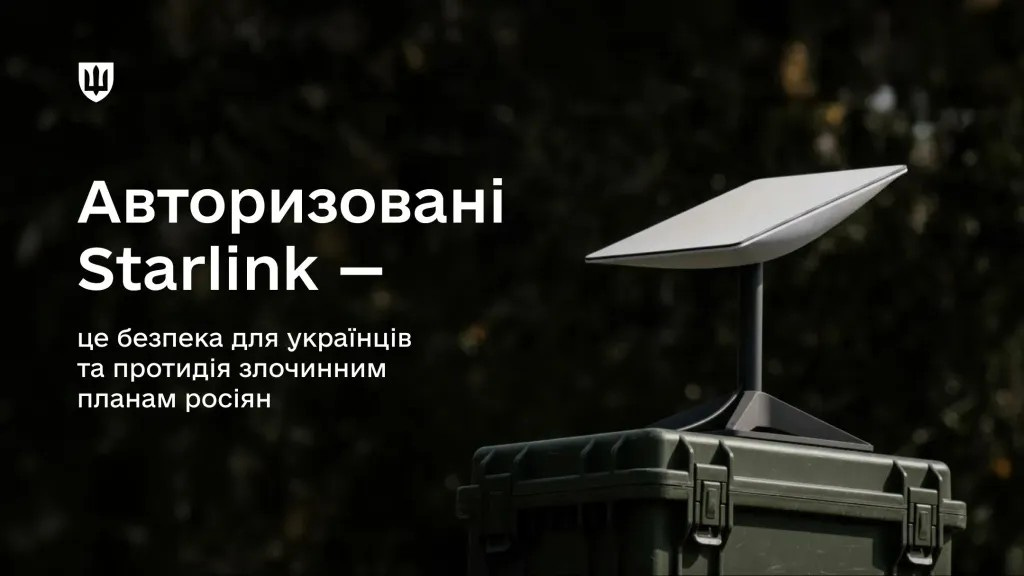
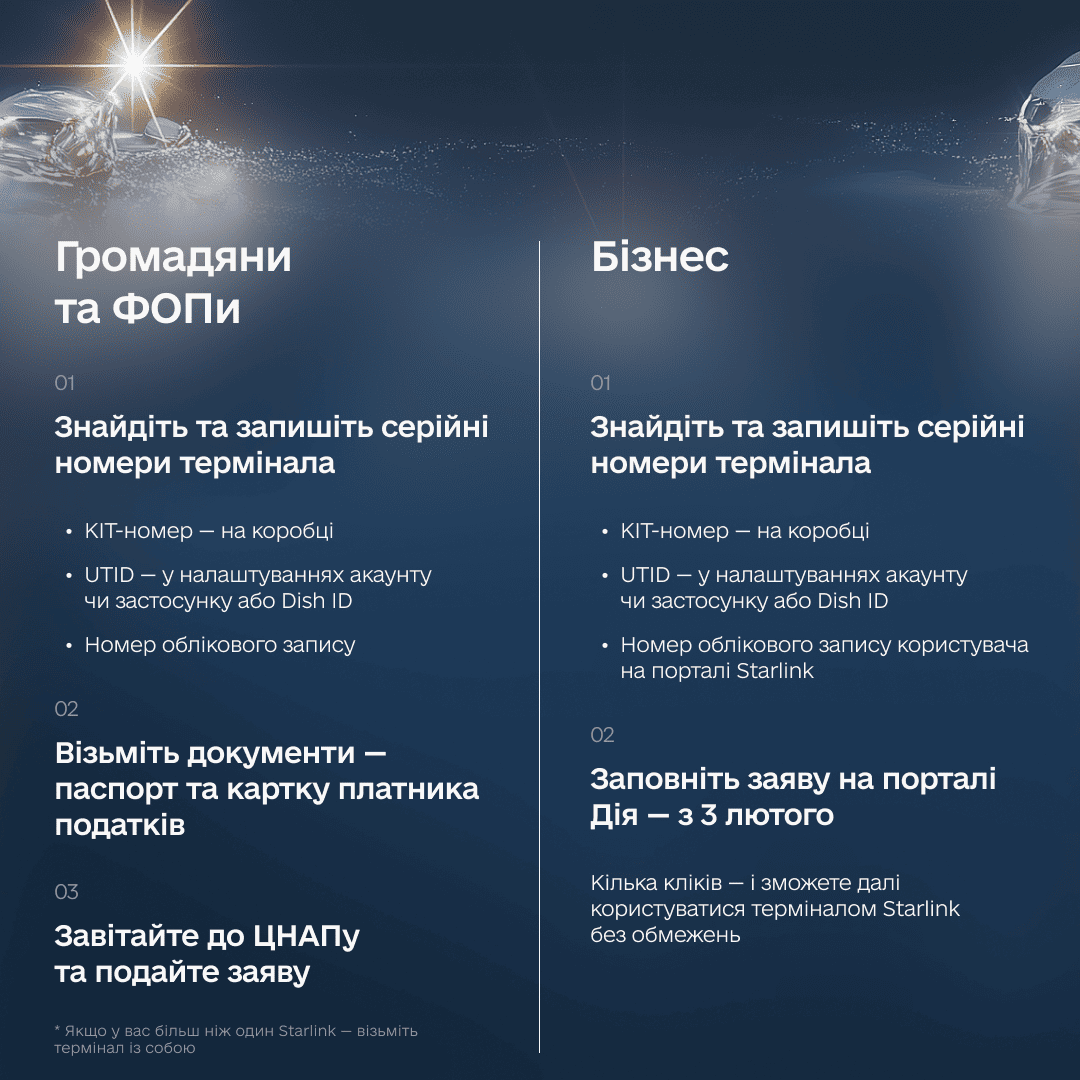
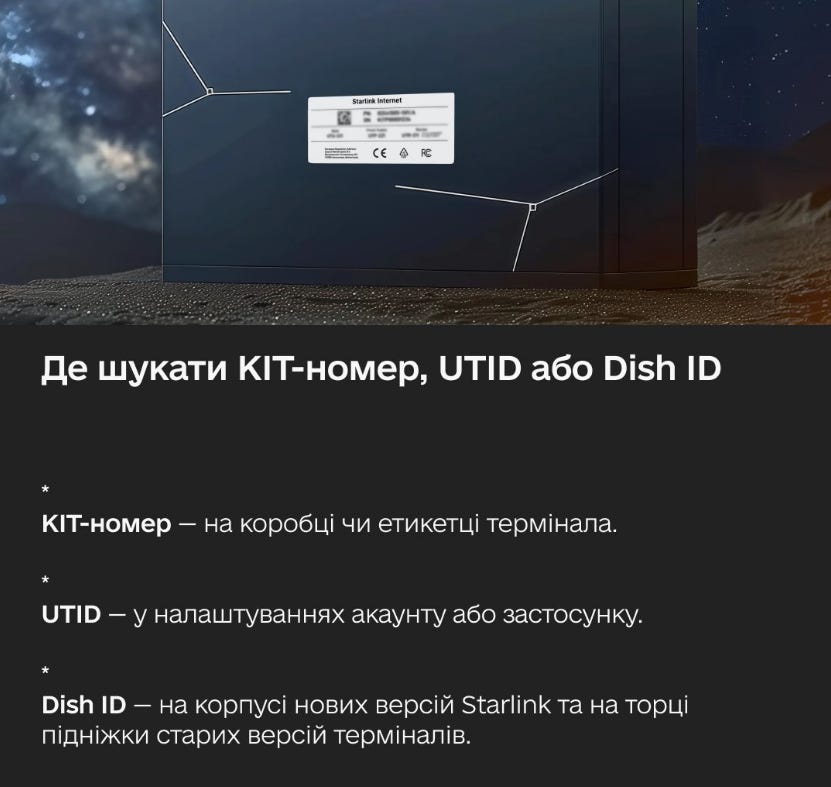
Verification of Starlink equipment within the structures of the Defense Forces of Ukraine was implemented in various ways. But it should be noted that Delta was effectively used as the main source of trusted authorization for any similar processes. And this made it possible to achieve an unprecedented level of scale and speed of these processes.
Within several weeks, already by February 17, in addition to CNAP the verification processes integrated Ukrposhta and Nova Poshta. This made it possible to pave a path to solving equipment verification problems for quite remote users.
Of course, the “underwater” part of the verification — that is, digital automation and logistics — remains non-public. But any specialist can imagine the scale of challenges, problems and complexities that all involved structures had to overcome.
Although the path was thorny and not easy, as of now the verification process looks rather organized. Even though certain problems still occur, primarily related to the “fine-tuning” of automation.
Consequences
For the occupiers this became a fatal and dramatic surprise. But again, insufficient awareness and certain technical problems of the blocking process itself led to significant losses on the Ukrainian side as well. And we are not talking only about lost drones... Interrupted communications at different levels unfortunately in some cases also led to human losses. Nevertheless the scale of losses, for the same reasons, is not disclosed.
We will not speculate in this analysis either about the scale of the losses themselves or about their acceptability. With time, as always happens, firsthand accounts and a variety of judgments will appear… But the fact is quite simple — the blocking was fast and far from painless for the Ukrainian side. And various analyses of shortcomings and mistakes are vital at all levels.
Nevertheless, subsequent events showed that the blocking did lead to a radical restriction of the enemy’s use of Starlink. And in some places the result was even a complete interruption of the enemy’s military communications. That is, despite several years of public discussion of the problem, no one expected the result to be so significant.
By the way, the Defense Forces of Ukraine managed to take advantage of such consequences in many sections of the front, significantly improving the tactical situation. Thus a considerable military success resulting from the blocking of Starlink is evident. And this to some extent is the result of the actions of all those involved… A positive and important result.
Of course, it is still somewhat early to draw final conclusions. But the Ministry of Defense of Ukraine has a good chance in the future to boast achievements in protecting our telecommunications space from the enemy. Perhaps it will even become the first case in many years when an initiative of the Minister of Defense of Ukraine was not merely executive or supportive but truly strategic and defensive. At least the shift of the role from executor to initiator is quite a positive fact.
The creation of Starlink equipment authorization processes was of course a challenge for many — for certain ministries, for the structures of the Defense Forces of Ukraine, and for the Security Service of Ukraine. It is a complex solution that has many components. But one way or another, without such solutions it is impossible to ensure the protection of the country. And the “harvest” collected by the SBU of citizens who were willing for money to register enemy equipment in their name is a marker of the successful beginning of the implementation of a comprehensive approach.
Summary
The conclusions that we can confidently draw from the entire chain of events and their causes.
The Ukrainian telecommunications space requires protection from abuse, first of all by the aggressor’s forces. Above all this concerns satellite and cellular communications that may be used in means of attack. This requires strategic decisions and the development of mechanisms for their implementation. For now we do not see signs of such a decision. Although certain measures by the Ministry of Defense of Ukraine give hope that there will be continuation.
Satellite communication systems such as Starlink, OneWeb and Amazon LEO still have no alternatives for us. Therefore all of them must become the subject of clear and simple security regulations. There is hope that the experience of implementing Starlink regulations will be scaled to the other systems as well.
The first month of creating verification processes gave a great deal of experience to all those involved. This is very valuable experience that needs to be analyzed and systematized. Soon there will be many more operators and systems in the satellite communications market. We must already prepare for this.
All structures of the Defense Forces of Ukraine must adapt their processes to the needs of the security perimeter as well as to related technical needs. First of all this concerns information services, monitoring and technical support. Repetition of losses due to poor notification is unacceptable. The vast majority of communications specialists still do not have separate specialized tools to meet their needs that could be created within the projects currently being implemented.
The lack of proper information for civilians and servicemen, particularly the formation of clear expectations regarding procedures, restrictions and capabilities related to satellite communication systems, cannot be justified by secrecy or the “fog of war”. More than a month has already passed, and the vast majority of Starlink users — of whom there are significantly more than 200,000 in Ukraine — still have no idea when and what changes will occur. This is one of the most important shortcomings that has so far remained without any response from officials. In particular, all users are interested in the question — when will the movement speed limit be lifted?
The problem was publicly known long before this. And despite all statements by officials, the problem was simply ignored for a long time. As a result of the accumulation of a huge amount of Starlink equipment, a painless scenario simply did not remain… Perhaps this will become a good example of which problems should not be postponed until the future…
In the coming years several global satellite communication operators will enter the market. And they are certainly looking at the Ukrainian market as currently the largest market on the continent — we indeed have more Starlink terminals than the rest of Europe. They would gladly “push” Starlink aside. But without clear and understandable rules and regulations will they come to us?... A good question…
In the “fog of war” the answers to other important questions also remain unclear — when will Starlink distribution start operating in Ukraine? That is, when will it be possible to purchase equipment not from gray resellers but legally and transparently? When will it be possible to sign contracts on behalf of organizations without guaranteed violations of certain regulations?
So what do we have in the “dry residue”? Quite positive trends regarding the actions of the Ministry of Defense, although with many questions including those regarding losses. We hope for continuation. And of course we have significant success in blocking and degrading the enemy’s capabilities. Whether further steps will also be positive — time will show.
But it can already be said in advance that the process of implementing security regulations of this scale will certainly appear in many textbooks and will be carefully studied by other countries.
The support of paid subscribers of SkyLinker.io will allow us to share even better and even more independent analytics, interesting reviews, and produce training and educational materials. From an inexpensive subscription costing a few cups of coffee per month to a more significant “Patron” level — all of this is clearly and qualitatively converted into information and knowledge, primarily for the defenders of Ukraine.
All the most interesting things from the world of communication and space technologies are also available in the form of educational audio podcasts and video lectures both on the website and on the SkyLinker Youtube channel.
How Serious Are the Real Problems with Starlink and Other Operators in Ukraine?

The issue of Starlink being used by Russian forces is, in reality, far broader and more complex than it is usually presented in typical media coverage. And it truly requires an urgent solution. Moreover, this is no longer a Starlink-only problem. Why? Let’s try to break it down—and at the same time understand what can be done about it.
Ukrainian Satellite Communications: Plans Becoming Reality

There is probably no one left today who is unaware of Starlink and its role in Ukraine’s successful defense against the aggressor’s invasion. High-speed satellite communications have transformed the battlefield, ushering in the era of “Drone warfare.”
Starlink 2025–2026: The Path to Global Hegemony

The year 2025 became the moment when Starlink finally established itself not merely as “the largest satellite constellation in the world”, but as a global communications infrastructure system. No longer a startup, not an experiment, not an “alternative for remote areas”
GuoWang - Overview of the Chinese State-Owned LEO SatCom Constellation

History of the Project and Its Names: Guo Wang (国网), Xingwang (星网), GW-A59, China SatNet
How Recent Space Weather Events Have Affected Our Satellites?

Many people are aware that space weather has a significant impact on our communications. We have written about this in more detail before. However, beyond the various effects on radio wave propagation through the atmosphere, it is important to understand how space weather affects satellites and entire satellite constellations. Is this a real threat? Or …