


The story of Russian use of Starlink has one defining feature: it never fully disappears. From time to time, new evidence emerges — new documents or new battlefield videos — repeatedly returning us to a simple fact: the Russian Federation has access to Starlink equipment and continues to use it.
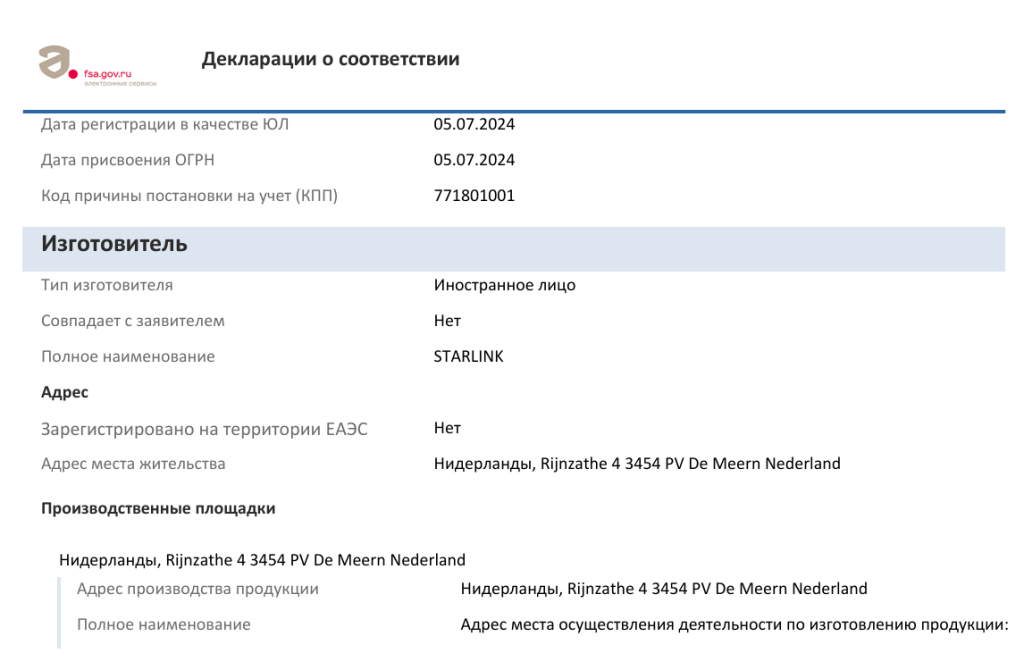
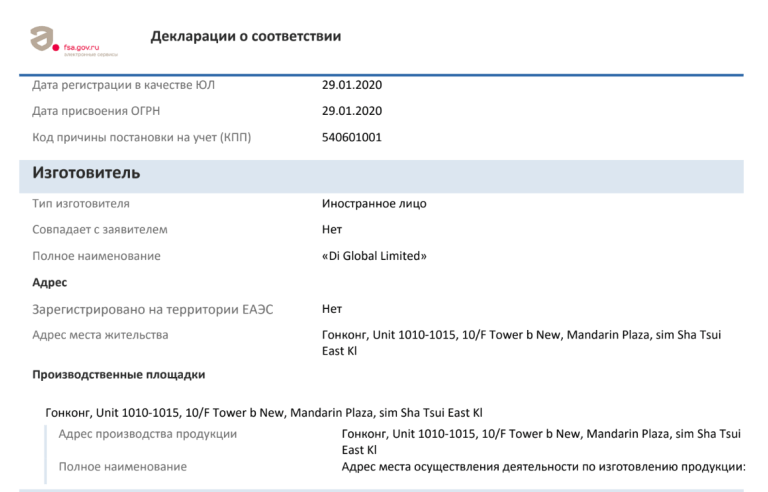
In early January 2026, another such piece of the mosaic appeared. Analysts at Nordsint drew attention to what seemed like a minor detail — an error in one of the Russian declarations of conformity. Yet it was precisely this “error” that made it possible to trace specific models of Starlink terminals that appeared in official Russian registries during the past year, 2025.
This is not about battlefield trophies and not about isolated cases. Declarations of conformity are neither a grey zone nor a black market. They are an official bureaucratic procedure that records the very fact of the equipment’s presence and its legalization for use on the territory of the Russian Federation as a state. In other words, Starlink does not appear in Russia by accident or “on its own.”
The investigation shows that supplies are routed through third parties and intermediary jurisdictions. Formally, this is civilian equipment; formally, it is not intended for military use. In practice, however, this means that channels of access to Starlink terminals for the Russian Federation are preserved and functioning.
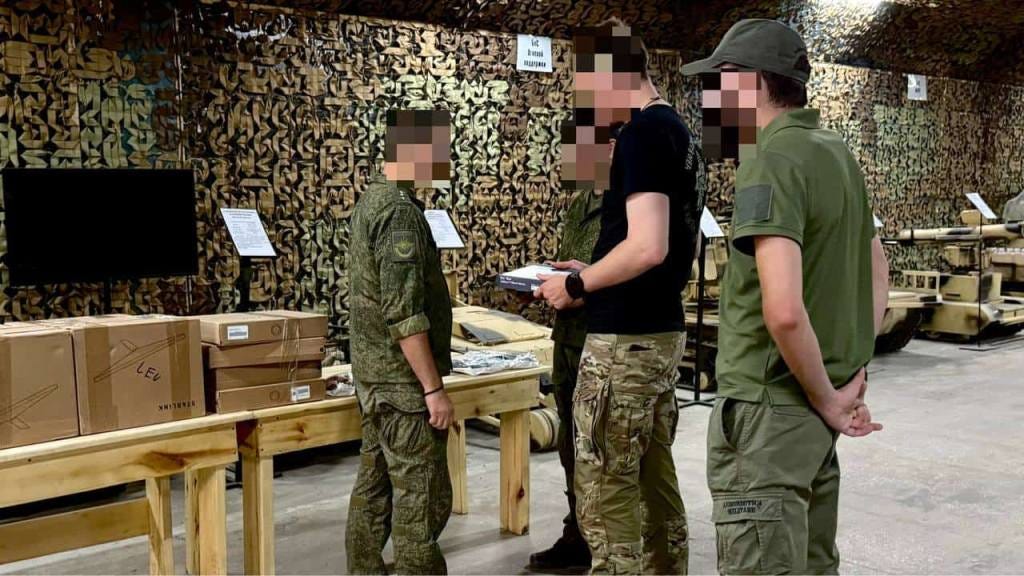
Against this background, the military context looks particularly revealing. The use of Starlink by the Russian side in combat conditions has long ceased to be a hypothesis. There have been videos, field confirmations, and OSINT data indicating the use of terminals for communications, data transmission, and coordination — including in conjunction with unmanned systems.

That is why the conclusion suggests itself. If the Russian Federation has stable access to Starlink equipment, if this equipment is recorded in official documents, and if there are already confirmed examples of military use, then the likelihood of Starlink being used on Russian drones is not merely high — it is logically expected.
Moreover, this problem is not limited to Ukraine. Starlink is a global system. Wherever the network operates and wherever there is physical access to terminals, their use is potentially possible regardless of declared restrictions or political positions.
In dry summary, the story of the “error in the declaration” once again highlighted an obvious but uncomfortable reality. Starlink, like other similar satellite communication systems, easily becomes an element of dual-use infrastructure. And as long as access to the equipment exists, it can operate not only for those for whom it is publicly positioned, but also for those who know how to bypass formal barriers.