

Many people are aware that space weather has a significant impact on our communications. We have written about this in more detail before. However, beyond the various effects on radio wave propagation through the atmosphere, it is important to understand how space weather affects satellites and entire satellite constellations. Is this a real threat? Or is it just talk about “tinfoil hats”?
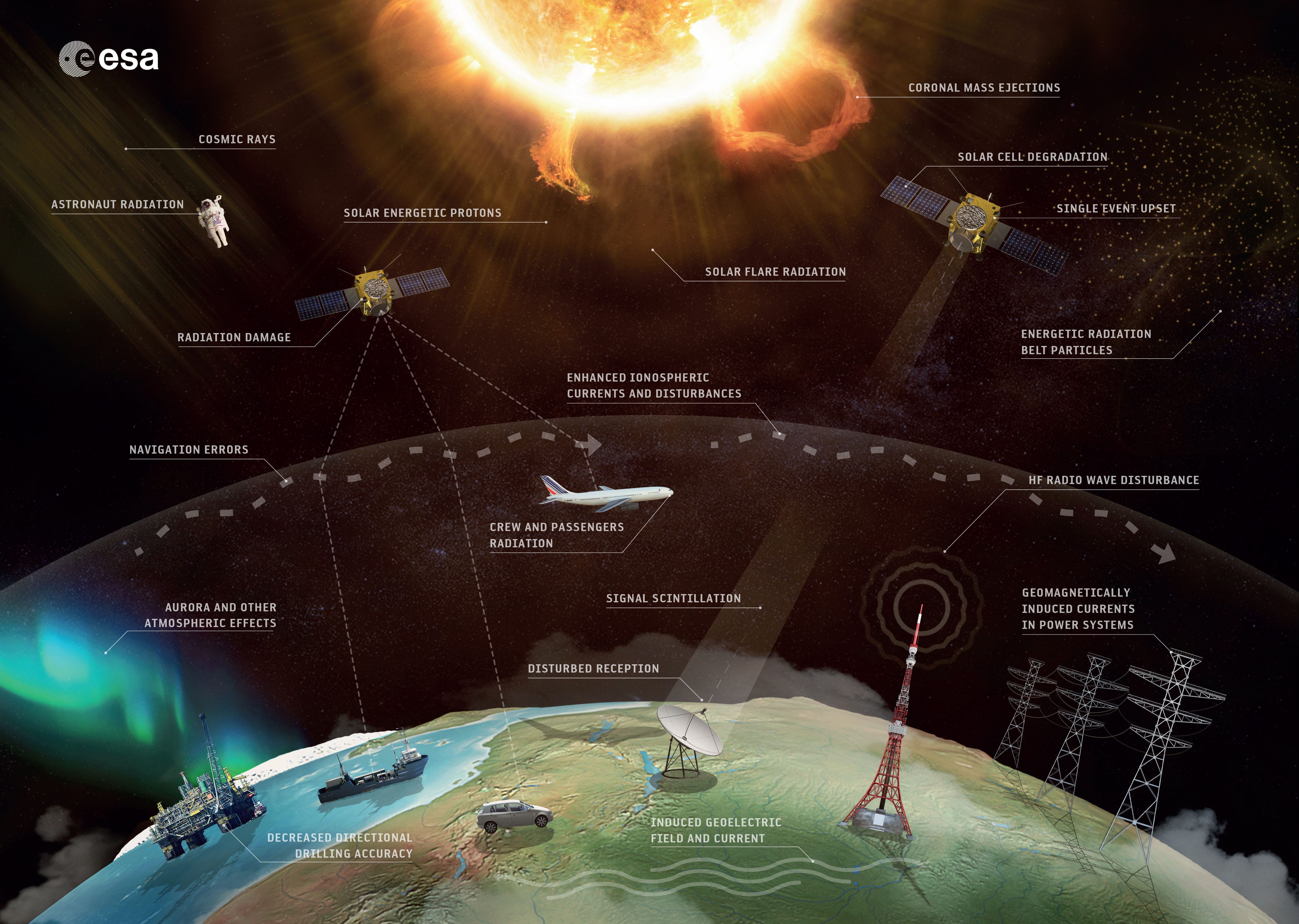
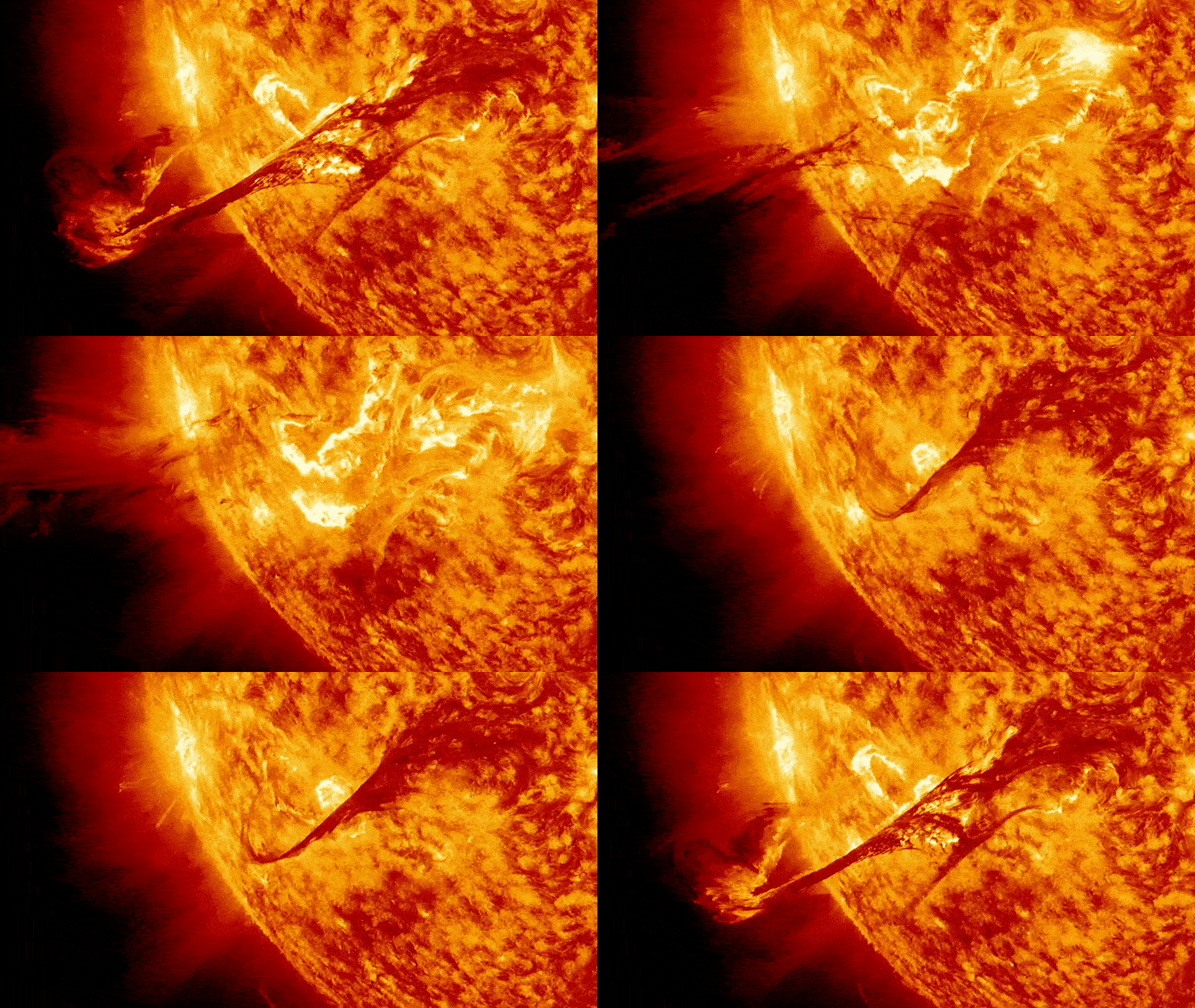
Space weather includes a wide range of different factors. However, the primary source of this weather for us remains our star — the Sun. The main drivers of such events are solar flares, which result in intense radiation across multiple spectra, the formation of “solar wind” streams, and even the ejection of significant masses from the upper layers of the Sun. And the most unpleasant effects, of course, are those that in one way or another strike our planet.
In this article, we also examine the most recent incidents caused by two of the most powerful events of the past 25 years:
The G5 geomagnetic storm of 2024, characterized by a chain of powerful flares and significant solar coronal mass ejections that occurred between May 8 and May 14, causing considerable damage and disruptions.
The G4 geomagnetic storm of January 19–21, 2026, which was accompanied by the strongest proton storm (S4) since 2003.
Our goal is to understand what real damage these phenomena caused, first and foremost, to modern satellite communications. We want our readers to be able to realistically assess the risks and consequences of hazardous space weather events for satellite communications, which are currently critically important for the defense of Ukraine.
The Dangers of Solar Flares
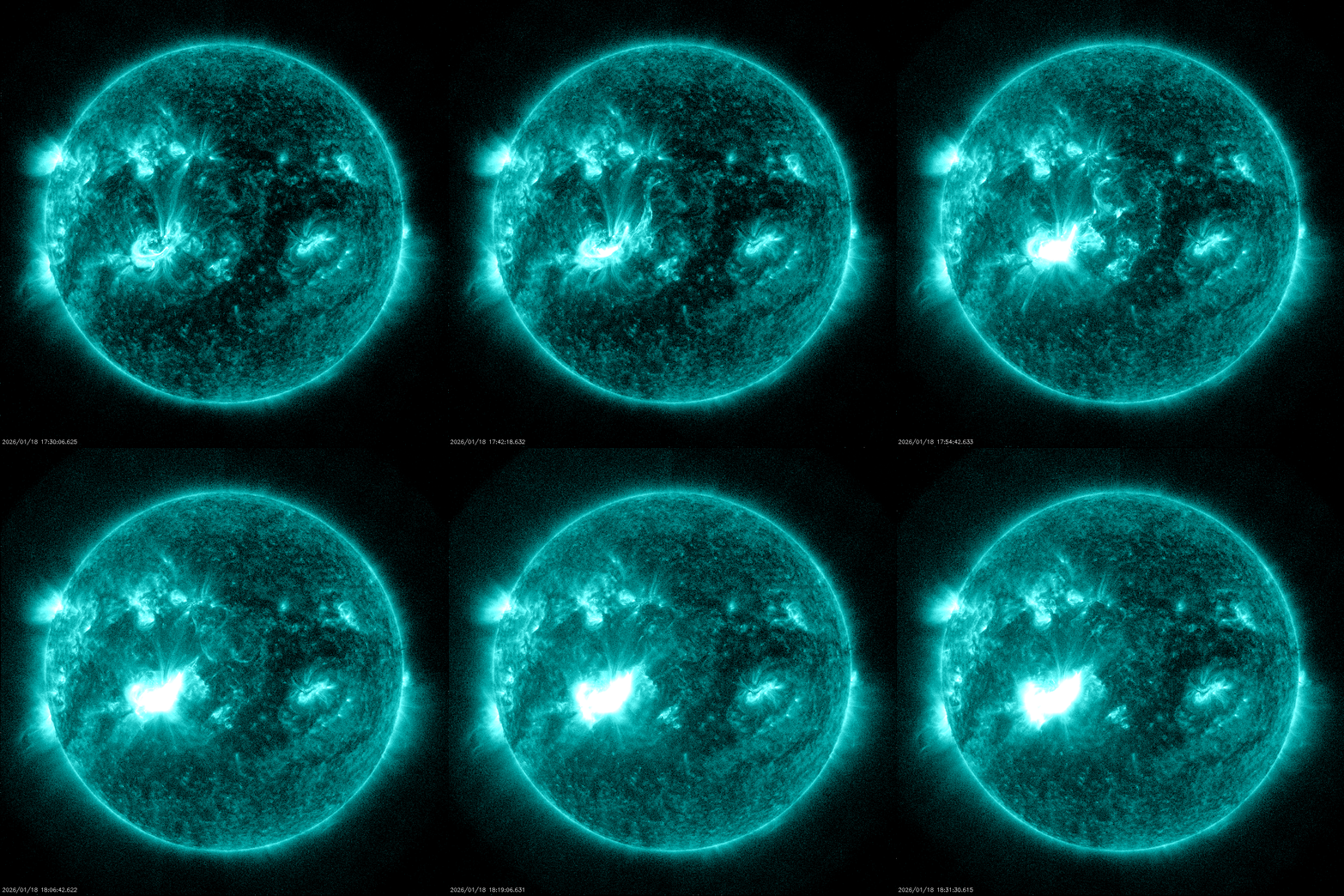
During certain events, which are still not very predictable, powerful solar flares occur on the Sun. During these flares, such enormous amounts of energy can be released that the emitted radiation can not only “blind” various satellite sensors but also “bathe” all onboard electronics in high-energy X-ray radiation. In other words, X-ray radiation can lead to damage of electronics and sensors. Modern shielding techniques do not provide reliable protection here, although it should be noted that incidents of this kind are still relatively rare
.
The emitted energy affects not only satellites but also the planet. In fact, when we observe such a flare, we are already under the influence of this radiation, which reaches us at nearly the speed of light. Thus, for both humans and satellites, a flare is an event that can only be detected after the fact. We cannot predict the exact time and location of such a “cosmic blast” in advance.
By itself, radiation from a flare can “blind” some radio receivers and increase the background level of radio interference on Earth — but only on the daylight side of the planet and for a relatively short time. To describe the power of such flares, an X-ray classification scale is used, dividing flares into classes A, B, C, M, and X, where each subsequent class represents approximately a tenfold increase in energy.
Flares of classes A–C are usually almost unnoticeable for terrestrial systems. M-class flares are already capable of causing serious radio interference, while X-class flares are the most energetic events and pose a real threat to satellites, orbital infrastructure, and high-frequency communications. Within each class, an additional numeric index is used to distinguish between “simply strong” and “extremely strong” flares.
What Are an S-Storm and a G-Storm?
A solar flare by itself does not have a long-term impact on satellites or our planet. However, it is important to understand that a flare is only one manifestation of certain solar events. In many cases, the same events lead to coronal mass ejections (CME), which travel at very high speeds. If their trajectory intersects our planet, or at least its magnetic field, we experience phenomena such as proton S-storms and geomagnetic G-storms.
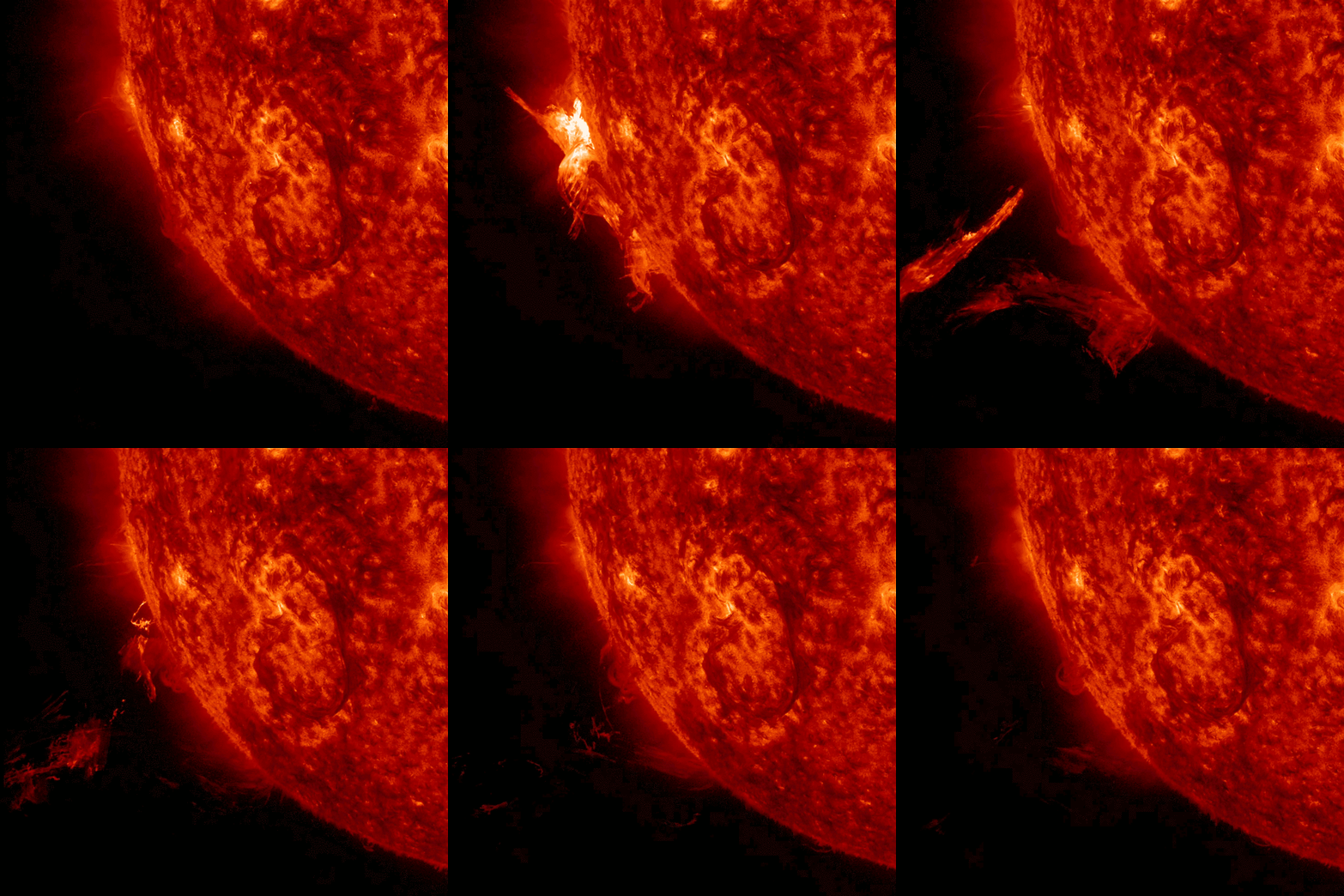
Unlike flares, these events can already be assessed and forecast. Existing specialized solar observation satellites make it possible to detect ejections, estimate their direction and velocity, and thus provide advance warnings — from several hours to several days.
Proton S-Storm
A proton S-storm occurs because the shockwave of the event initially accelerates a stream of protons. Accelerated to extremely high velocities, they effectively transfer their radiation energy to everything they strike — primarily satellites and Earth’s atmosphere. This is, of course, a highly simplified explanation, but the result is a significant buildup of static electrical charges on satellites, which poses a risk of electrical discharge and electronic failure.
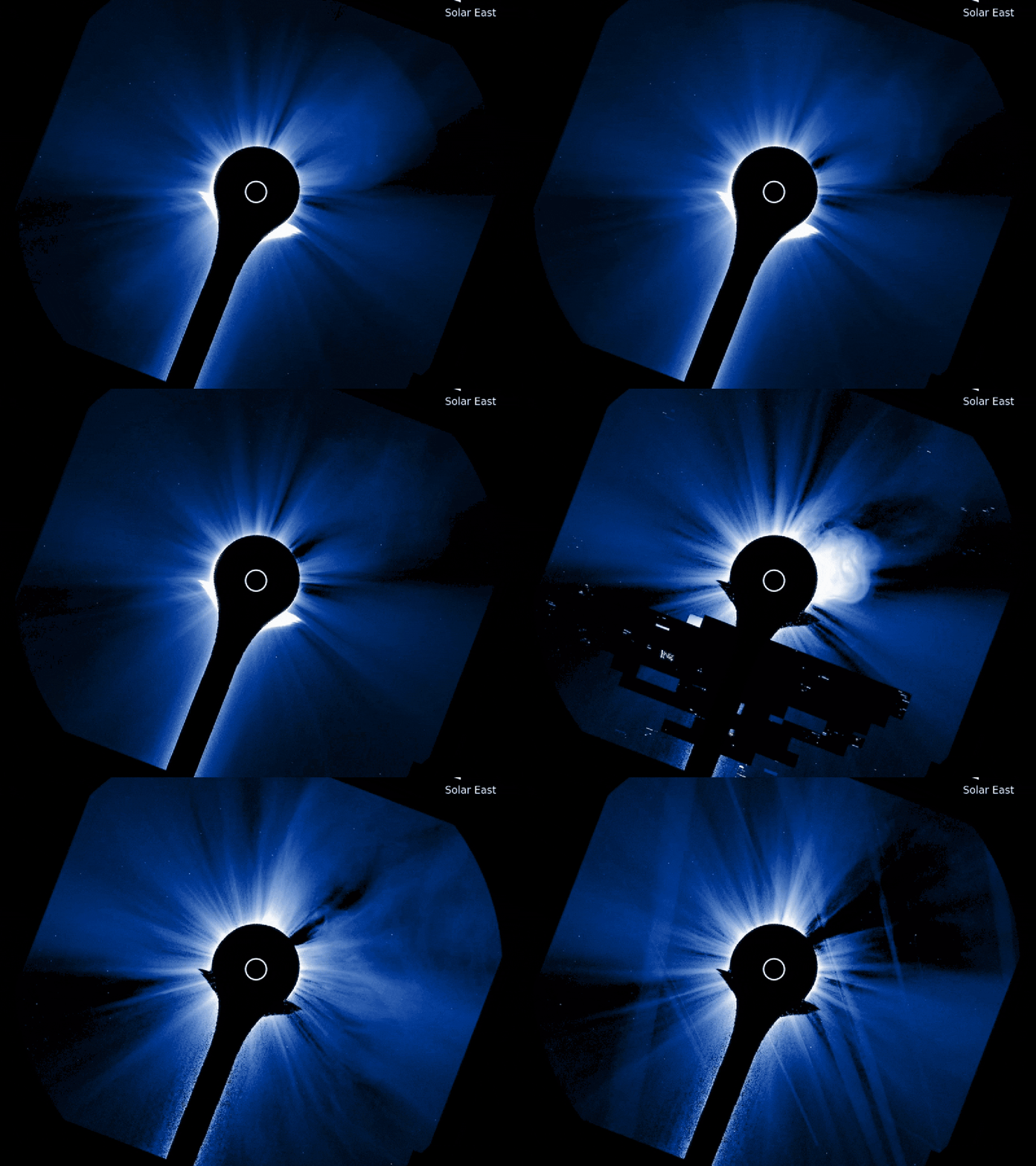
For this reason, during an S-storm satellites are often switched to a special protective mode that limits functionality but reduces the risk of electronic failure in the event of anomalies. High-energy protons can also cause Single Event Upsets (SEUs) — situations where a particle “flips” a bit in computer memory without physically destroying the circuitry, leading to software errors. If such an upset occurs, the satellite automatically switches to Safe Mode and waits for operator intervention.
For example, in May 2024, Planet Labs (operator of the SkySat and SuperDove Earth observation satellites) was forced to place its satellites into protected mode. In January 2026, the meteorological geostationary satellite GOES-19 experienced sensor anomalies and required system reboots. Operators of LEO satellite constellations also activate special satellite modes during such events, which can sometimes affect communication quality.
Some degradation of Starlink and OneWeb connectivity was reported by users of these networks during such space weather incidents, but the networks themselves remained generally operational. According to reports from LEO SatCom users in the Ku and Ka bands, degradation was more noticeable at higher latitudes and was not a widespread phenomenon. Starlink and OneWeb users were affected only minimally — mainly isolated complaints about short-term terminal disruptions.
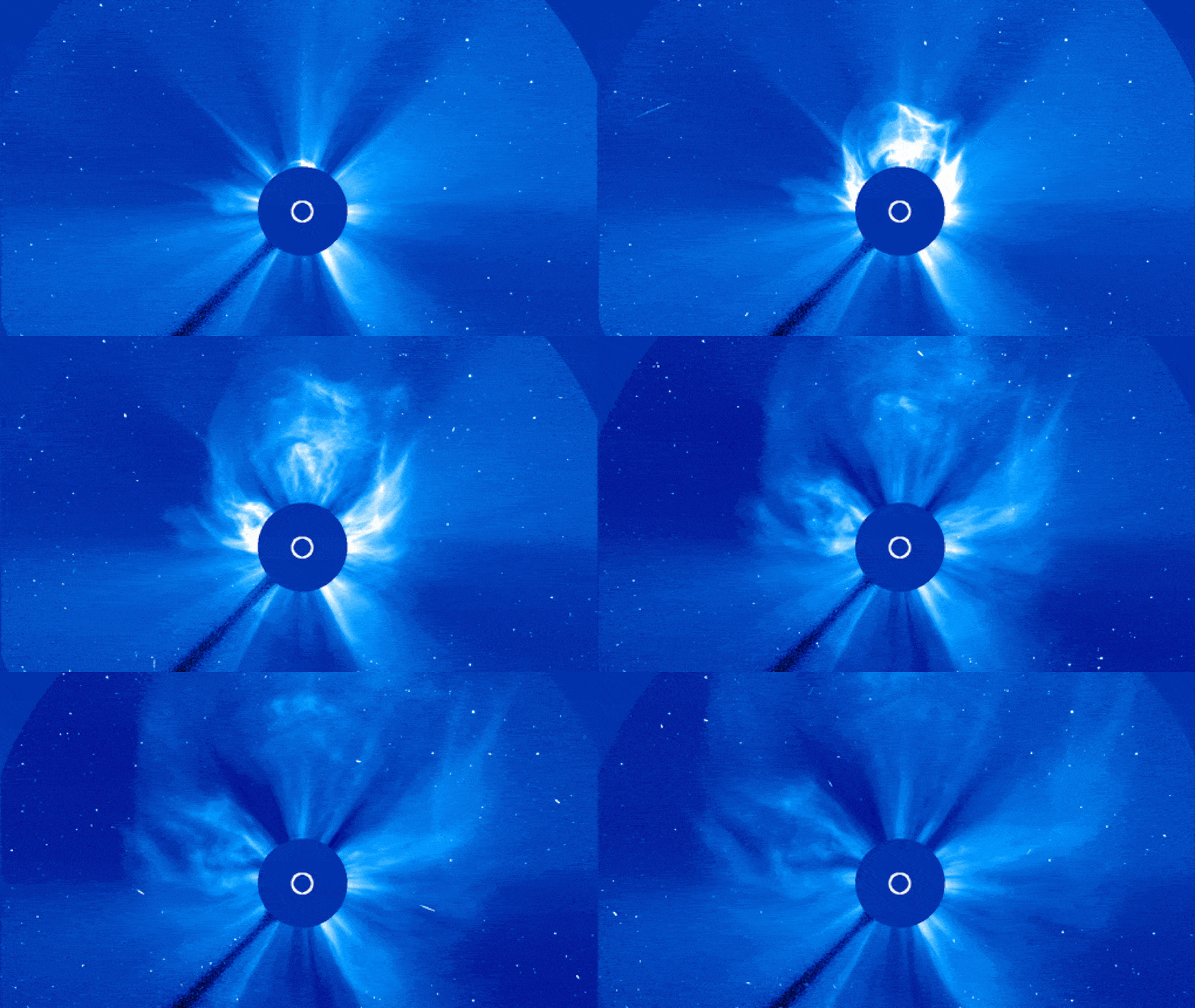
The intensity of proton storms is typically assessed using the S-index (S1–S5), which reflects the flux of high-energy protons near Earth. Lower levels have limited impact, while S4–S5 indicate extremely high particle fluxes that pose serious radiation risks to satellites, aviation, and space hardware.
Geomagnetic G-Storm
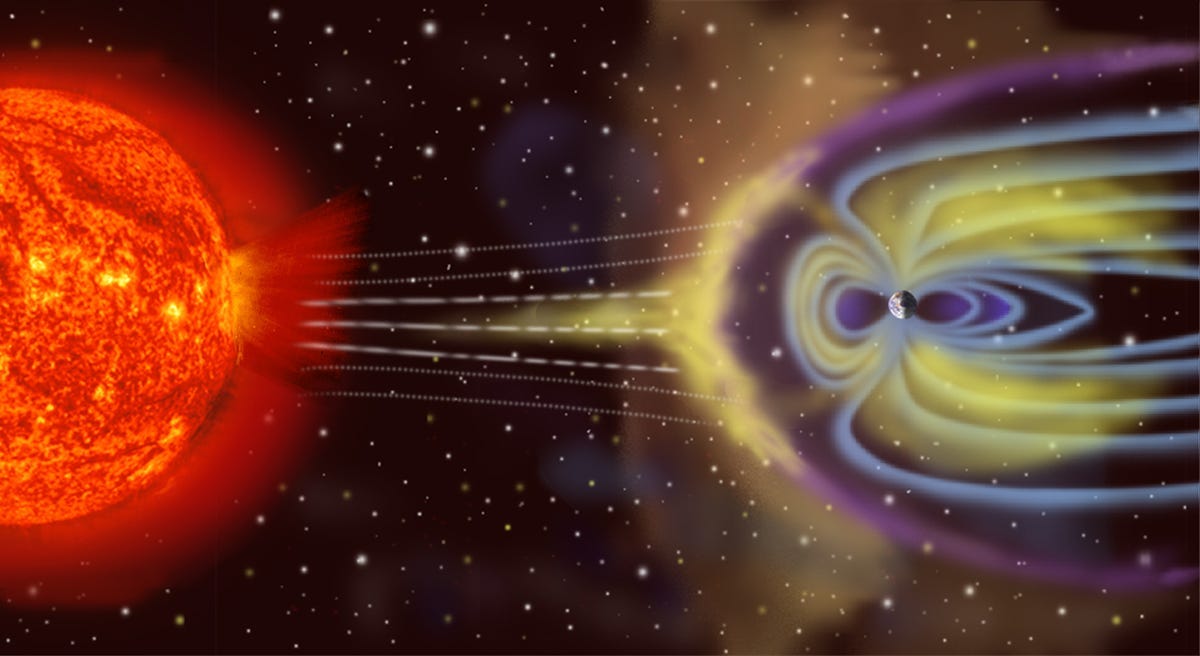
Within the constant flow from the Sun that we call the “solar wind” are many charged particles that interact with the planet’s magnetic field. Earth’s magnetic field usually acts as an “umbrella,” redirecting much of the solar wind particles along its so-called magnetic field lines. As a result, most particles enter the atmosphere closer to Earth’s polar regions, producing the well-known auroras.
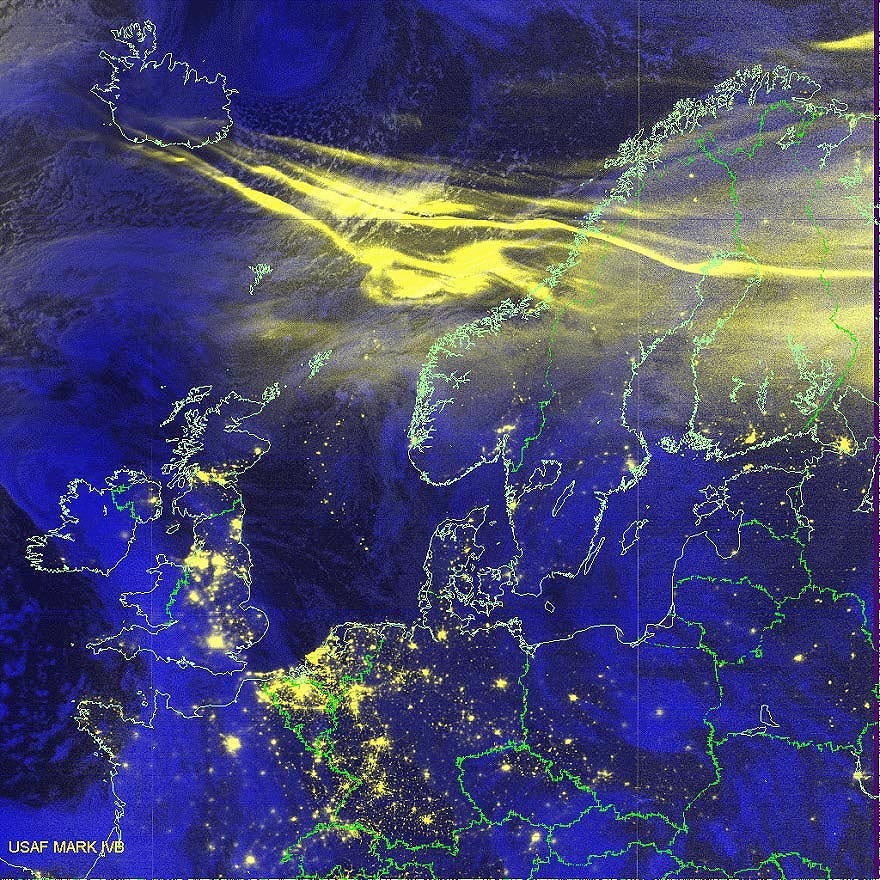
However, when a significant coronal mass ejection reaches Earth, the magnetic field is “compressed.” The stronger this compression, the closer to the equator we observe auroras — phenomena that are unusual at low latitudes. During the geomagnetic disturbances of May 2024 and January 2026, auroras were visible over some regions of Ukraine. Auroras themselves are not dangerous; they simply indicate how much the particle entry trajectories into Earth’s atmosphere have changed.
To assess the strength of geomagnetic storms, the Kp index is commonly used — a dimensionless scale from 0 to 9 indicating how disturbed Earth’s magnetic field is. Values of Kp 5 and above correspond to geomagnetic storms, while Kp 8–9 indicate extreme events capable of significantly affecting the ionosphere, navigation systems, and satellite orbits.
For ease of communication, a simplified G-scale is used:
G5 (Kp ≥ 9)
G4 (Kp ≥ 8)
G3 (Kp ≥ 7)
G2 (Kp ≥ 6)
G1 (Kp ≥ 5)
The most problematic effect is that ionization of the upper atmosphere makes it partially electrically conductive. At that point, ionospheric electric charges come into play — not the same as those responsible for ordinary lightning, but atmospheric charges located in the highest layers. These massive accumulated charges effectively use the ionized atmosphere as conductive elements of a household electric heater, without breakdowns or lightning discharges. This leads to rapid and significant heating of this part of the atmosphere. And what happens to any gas when heated? Correct — it expands.
Consequences for Satellites
With such significant atmospheric expansion, satellites in low Earth orbit (LEO) suddenly find themselves within the upper atmospheric layers — not dense, but denser than usual. This leads to significant deceleration of satellites and rapid orbital decay. This complicates the operation of satellites, LEO networks, and operational control centers alike — space communication geometry requires extremely precise pointing of antennas and inter-satellite link (ISL) lasers. Changes in satellite positions under these conditions are far greater than those expected during normal operations.
In May 2024, satellites at altitudes of 210–300 km experienced an increase in atmospheric drag by a factor of 8–10. At altitudes of 400–600 km, where most of the Starlink constellation operates, drag increased by 3–5 times. Even satellites at altitudes of 700–850 km (OneWeb and many others) experienced a 1.5–2× increase in drag. These events resulted in the largest mass migration of LEO satellites in human history.
SpaceX also lost part of a batch of 12 Starlink satellites launched shortly before the event — due to the unexpected increase in drag, all of them prematurely deorbited and burned up in the atmosphere. This was not the first such loss: in 2022, a G2 storm led to the unplanned destruction of 38 Starlink satellites.
Some satellites encountered failures in orbit maintenance and collision avoidance systems. In particular, the Combined Space Operations Center (CSpOC) recorded thousands of “loss of track” events involving space debris, as their trajectories changed faster than algorithms could update. Low-orbit navigation was significantly complicated by ionospheric scintillation, which caused GNSS receivers on satellites to experience “loss of lock.” In other words, some satellites temporarily became “blind” from a navigation standpoint. Available reports also mention other incidents, including failures of Iridium satellite systems.
The January 2026 events led to similar consequences in terms of increased atmospheric drag in low orbits, albeit on a smaller scale than in 2024. And this is before the tens of thousands of additional satellites planned for these orbits are even deployed — under such conditions, the risk of a cascading Kessler effect during similar storms increases exponentially. Experts from leading space agencies, including ESA, have issued warnings about this.
It is also worth noting that the service life of almost every satellite in orbit is primarily determined by fuel reserves and consumption rates. Events involving significant increases in atmospheric drag lead to severe depletion of these fuel reserves. In such conditions, a satellite may expend a month’s worth of fuel in a single day for orbit correction. Thus, the consequences of space weather events also include substantial future costs for LEO operators to replenish constellations due to shortened satellite lifetimes.
Conclusion
If we recall a previously published article on the impact of space weather on modern communications across various radio frequency bands, everything described above paints a clear picture: space weather critically affects satellite communication systems and GNSS operation. Therefore, it is necessary to continuously monitor such risks and plan critical operations and communications of critical infrastructure accordingly.
A particularly instructive example of operational use of space weather conditions in military planning occurred in May 2024. The adversary exploited a week-long chain of geomagnetic disturbances to employ its electronic warfare (EW) systems designed to jam terminal-to-satellite links of the Starlink LEO network.
The deployment achieved only very limited partial success and clearly required effectiveness assessment and parameter adaptation of the equipment. A significant number of Starlink disruptions and degradations caused by geomagnetic storms served as a form of cover — against this background, detecting deliberate interference was indeed difficult. Nevertheless, the use of electronic warfare was detected, followed by identification of the source and destruction of the EW assets.
Thus, a clear understanding of the real manifestations of space weather effects and their correlation with observed reality is an essential component of protecting modern satellite communications on the battlefield.
The risks posed by space weather events to low Earth orbit communication satellites will only increase. This is driven both by operators’ plans to use lower orbits, especially for Direct-to-Cell services, and by the rapid growth in the number of LEO satellites, which increases the risk of a “domino effect” in the event of collisions on crowded orbits. From this perspective, LEO projects at higher altitudes may be considered less risky.
Undoubtedly, the number of real incidents and damages caused by space weather events is significantly greater than what is described in this article. Experience shows that some incidents remain in a “fog of non-publicity” for extended periods, and accounting for reduced satellite service life requires historical depth. At the same time, increasing competition among SatCom operators will inevitably lead to further suppression of such incident details in the public domain. Nevertheless, humanity is only beginning to intensively use near-Earth space. We can only hope that the price we pay for the experience gained in the coming years will not be too high.
The support of paid subscribers of SkyLinker.io will allow us to share even better and even more independent analytics, interesting reviews, and produce training and educational materials. From an inexpensive subscription costing a few cups of coffee per month to a more significant “Patron” level — all of this is clearly and qualitatively converted into information and knowledge, primarily for the defenders of Ukraine.
All the most interesting things from the world of communication and space technologies are also available in the form of educational audio podcasts and video lectures both on the website and on the SkyLinker Youtube channel.