

In early July, Eutelsat filed an application with the US regulator FCC for a new low-Earth-orbit constellation called Eutelsat Next.
This is a separate system comprising 528 satellites at an altitude of 1,220 km, designed to operate in parallel with OneWeb. It is focused on higher capacity, flexible resource reallocation, onboard data processing and, potentially, optical inter-satellite links.
This is significant news for the European SatCom industry and a fairly important step towards a more competitive US market for LEO SatCom services. However, Eutelsat has not yet announced a manufacturing program or launch schedule for the 528 satellites. No manufacturer, contracts, budget or launch vehicles have been identified.
For now, Eutelsat Next is a technically detailed filing that secures the company a position in the future spectrum and market environment.
Almost a year ago, SkyLinker published the article “Starlink, OneWeb, Kuiper - A Deep Analysis and Comprehensive Comparison”, in which we compared the differences between the best-known LEO SatCom projects, their strategies and other distinguishing features. Since Project Kuiper was renamed Amazon LEO, we have also written about Jeff Bezos’s ambitious TeraWave project.
Now it is time to examine Eutelsat’s strategic low-Earth-orbit plans in greater detail.
Eutelsat Next in figures
The system proposed to the US regulator is structured as follows:
● 528 operational satellites, plus an undisclosed number of in-orbit spares;
● 24 orbital planes, with 22 spacecraft in each;
● circular orbits at an altitude of approximately 1,220 km;
● an orbital inclination of 60°;
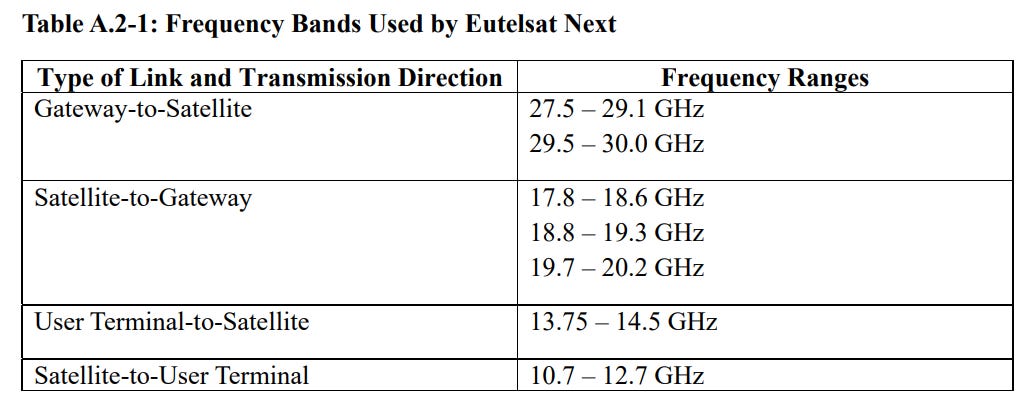
● Ku-band for user links;
● Ka-band for communications with ground gateways;
● up to 140 steerable Ku-band beams per satellite;
● onboard digital signal processing;
● compatibility with 5G NTN;
● OISLs — potential optical inter-satellite links;
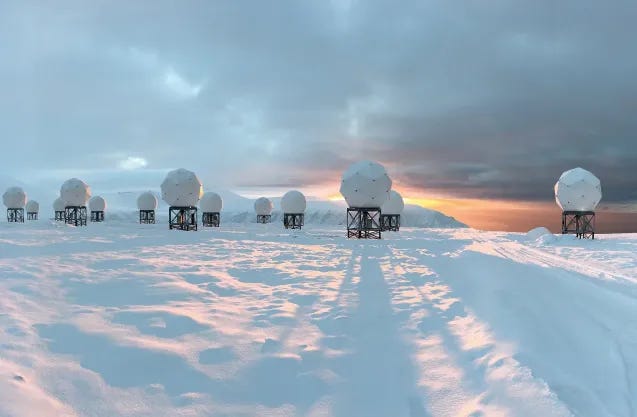
● approximately 50 ground gateways, including six existing OneWeb stations in the United States.
In terms of scale, this is not an attempt to catch up with Starlink by matching its satellite count. The architecture is more reminiscent of a specialised high-capacity layer intended for enterprise, government and mobile communications.
Why the application was filed now
In the satellite business, spectrum often needs to be reserved before satellite manufacturing begins.
Eutelsat submitted its application as part of a new processing round for non-geostationary systems operating in the Ku- and Ka-bands. For the operator, this is a way to secure full standing in the future coordination of spectrum with other constellations.
Those that enter the relevant regulatory round on time are in a much stronger position to protect their networks against interference. Those that apply later may be required to adapt to systems that have already been authorised.
The filing therefore serves as a form of strategic insurance. Eutelsat is not committing to build the entire system immediately, but it is ensuring that the future project is not left without access to the US market and spectrum.
This is particularly important because Eutelsat Next has been registered as a separate system. It cannot automatically inherit the regulatory rights of the existing OneWeb system.
How Next will differ from OneWeb
At first glance, the two systems are very similar. They will operate at approximately the same altitude — around 1,200 km. This simplifies compatibility between ground infrastructure, terminals and network management.
However, their orbital logic is different.
OneWeb uses near-polar orbits. Its satellites pass over high latitudes and provide coverage in regions where many other LEO systems have only a limited presence.
Eutelsat Next will have an inclination of 60°. This configuration concentrates resources over the mid-latitudes, where the main commercially attractive markets are located:
● North America and Europe;
● the Middle East;
● a significant part of Asia;
● transatlantic aviation routes;
● key maritime corridors.
In other words, OneWeb provides geographical coverage, while Next could add capacity where the largest numbers of customers and the highest volumes of traffic are concentrated.
This is neither a replacement for OneWeb nor a name for the replenishment satellites that have already been ordered. Eutelsat separately purchased 440 new OneWeb spacecraft from Airbus, which are intended to gradually renew the existing constellation. The manufacturer, financing and start of deliveries have already been determined for those satellites.
Next is a different project. It is intended to operate on top of the existing LEO infrastructure as an additional network layer.
140 beams: why they are needed
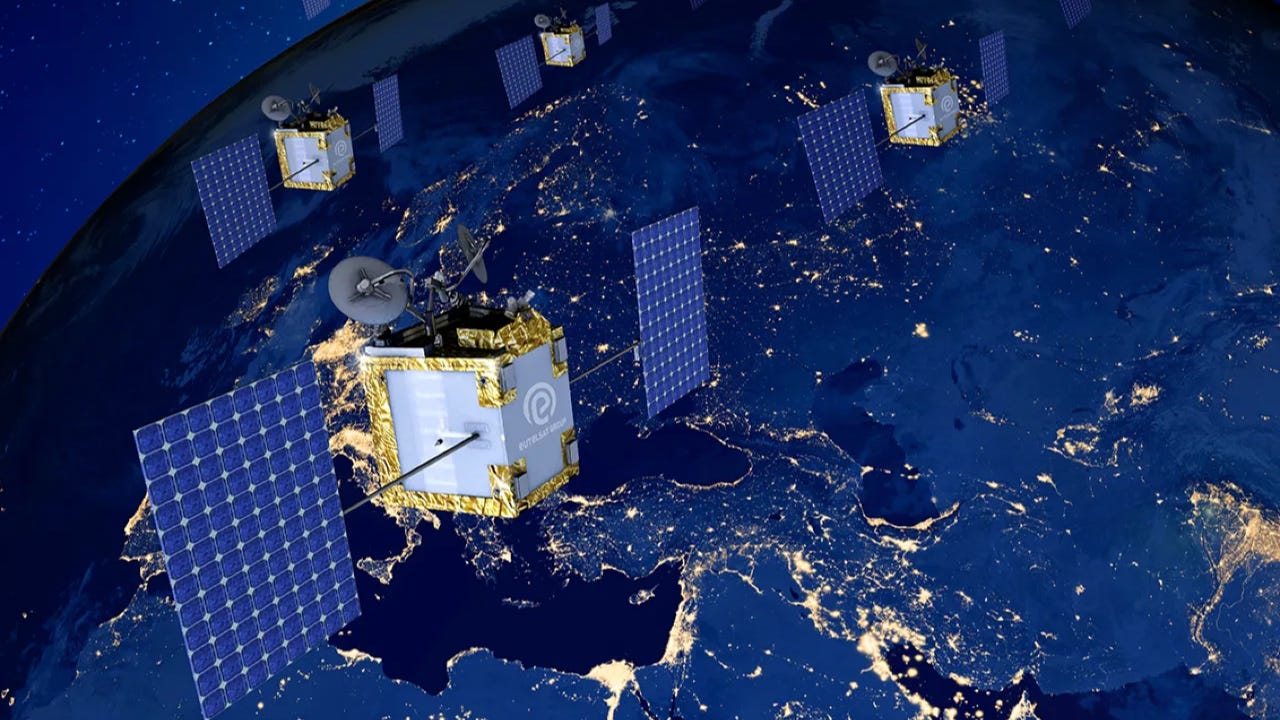
Up to 140 steerable beams on a single satellite means that its resources will not be rigidly tied to a fixed coverage map.
The operator will be able to direct more capacity to where it is needed at a particular moment: an aviation corridor, a maritime route, a government node or an area with overloaded mobile infrastructure.
For SatCom, this is more important than the nominal speed of an individual terminal. The commercial efficiency of a LEO system is determined by how effectively it can convert orbital resources into paid traffic.
The more flexibly an operator can move capacity between regions and customers, the less capacity remains idle over areas where there is insufficient demand at a given time.
Onboard digital processing will also allow the satellites to perform more network functions instead of merely relaying signals between users and ground stations. This should make the system more adaptive and facilitate its integration with terrestrial telecommunications networks.
Laser links could change the network architecture
The existing OneWeb system is heavily dependent on ground gateways. Traffic is transmitted from a terminal to a satellite and then from the satellite to an available gateway station.
Optical inter-satellite links would allow data to be transmitted between spacecraft without immediately being sent back down to Earth. Traffic could be routed through several satellites and directed to the most suitable gateway.
This would be particularly valuable for:
● communications over oceans;
● government and military networks;
● regions with insufficient ground infrastructure;
● redundancy in the event of the failure or blocking of individual gateways.
However, laser terminals should currently be regarded as a design option rather than a guaranteed feature of every satellite. They increase the spacecraft’s mass, power consumption, cost and complexity. The final configuration will depend on the manufacturer and the business model.
5G NTN, but not necessarily smartphone connectivity
The specifications for Next mention compatibility with 5G NTN. This does not mean that the system will automatically work with ordinary mobile phones.
The user links have been filed in the Ku-band, which generally requires specialised satellite antennas.
The most likely interpretation is different: Eutelsat wants to make the satellite segment part of the standard telecommunications infrastructure. Next could provide backhaul for mobile base stations, connect private enterprise 5G networks and operate in conjunction with terrestrial operators.
For customers, a satellite network in this model becomes not a separate service but one of several transport layers alongside fibre-optic and terrestrial radio communications.
Who needs a system like this
Eutelsat is unlikely to be planning a direct copy of Starlink’s mass-market model.
Its stronger position lies in professional and institutional markets:
Government and defence communications. European governments need an alternative to infrastructure that depends entirely on a private US operator.
Aviation. Orbits with an inclination of 60° provide strong coverage of the busiest aviation routes.
Maritime transport. The system could provide high capacity along major commercial and passenger routes.
Mobile backhaul. Next could connect remote base stations and help operators rapidly expand coverage.
Enterprise networks and critical infrastructure. The energy, transport and industrial sectors, as well as emergency response services, need backup links that do not depend on local terrestrial networks.
This market is smaller than the home internet market in terms of terminal numbers, but potentially far more valuable on a per-customer basis.
Is Next connected to IRIS²?
Eutelsat is a key participant in the European IRIS² secure communications program. It is therefore natural to consider the new LEO system in the broader context of European satellite sovereignty.
However, no direct connection between Next and IRIS² has yet been confirmed.
Next could potentially become a commercial layer complementing the government system. The two could use shared technologies, ground stations or manufacturing platforms. However, it could also be an independent global system developed by Eutelsat separately from the European program.
For now, it is more accurate to speak of potential technological and strategic synergy rather than a single unified program.
What remains undefined in the project
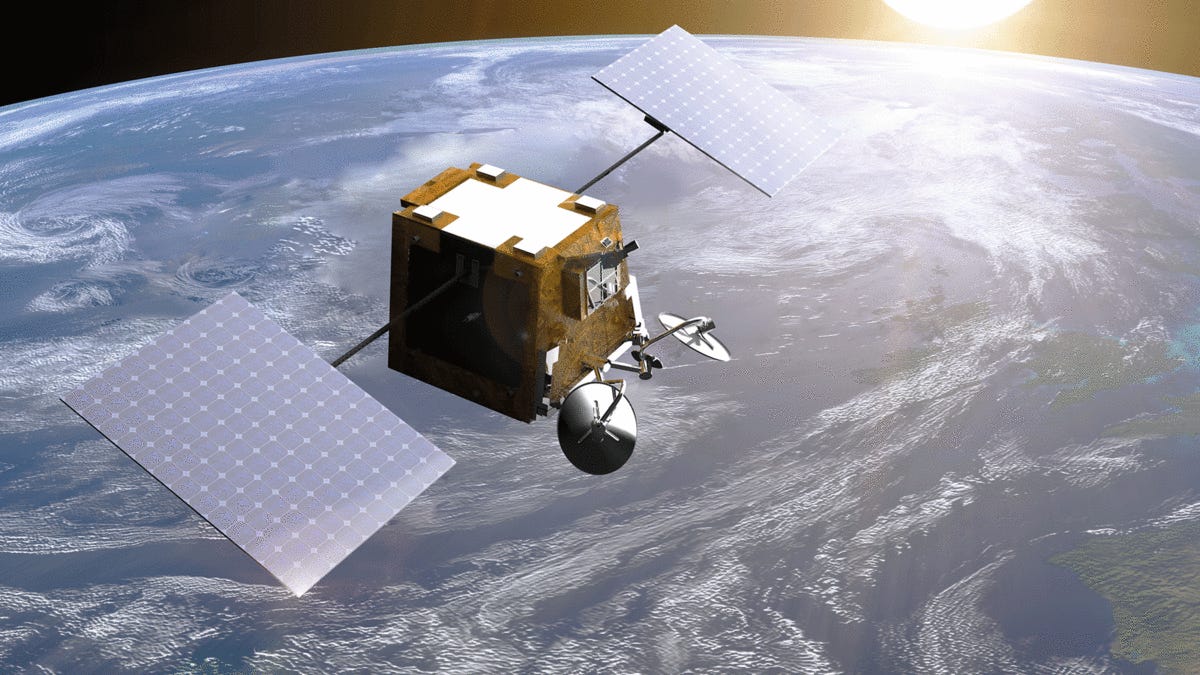
Despite the detailed orbital configuration, key practical questions remain open.
The following have not been announced:
● who will manufacture the satellites;
● how much each spacecraft will weigh;
● what its capacity will be;
● whether laser terminals will be included in the baseline configuration;
● when production will begin;
● which launch vehicles will be used to deploy the system;
● how much the program will cost;
● whether a final investment decision has been made;
● when the first launch could take place.
This means that Eutelsat Next currently sits somewhere between a concept and a fully established program.
The system has already been developed in sufficient detail to reserve spectrum and begin coordination. However, it is not yet sufficiently defined to assess the timeline, cost or actual probability that all 528 spacecraft will be deployed.
The most difficult issue — financing and launches
Eutelsat is simultaneously financing the renewal of OneWeb, participating in IRIS² and supporting a large GEO business. Building another LEO constellation would require several billion euros if the company decides to implement the proposed system in full.
Access to launch services is no less challenging.
European rockets currently cannot provide the launch cadence required for the rapid deployment of hundreds of satellites. Using SpaceX could be economically efficient, but it would create dependence on the main competitor in the LEO market.
Next will therefore most likely be deployed in stages. The proposed 528 satellites may represent the maximum target configuration rather than the size of the first production batch.
An altitude of 1,220 km brings additional responsibility
At this orbit, a failed satellite will not quickly decay under the influence of atmospheric drag. It could remain in space for decades or longer.
The system will therefore require highly reliable propulsion systems, adequate fuel reserves, redundant control and continuous conjunction monitoring.
Even if only 1% of the spacecraft in a 528-satellite system became uncontrollable, this would amount to approximately five large objects in a long-lived orbit.
The plan provides for the deorbiting of spacecraft after the end of their operational life, usually within five years. However, regulators will assess not only the stated timeframe but also how realistically it can be met under different failure scenarios.
Conclusions
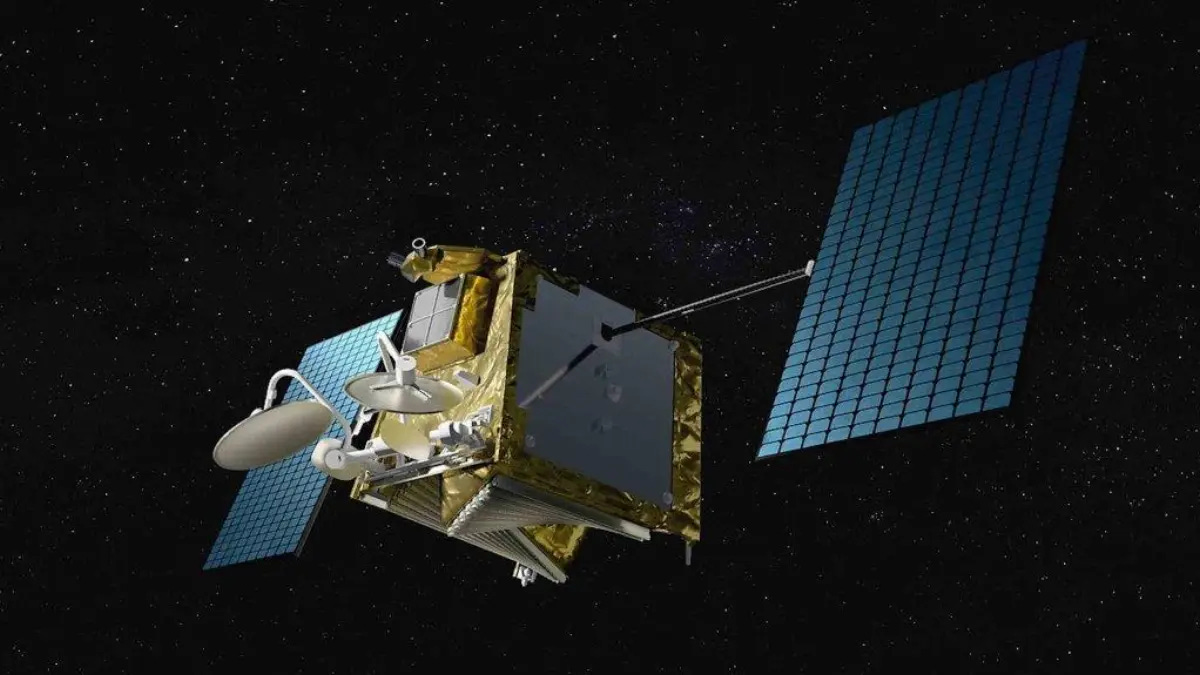
Eutelsat Next is primarily a signal that the company does not regard the existing OneWeb system as the final stage of its LEO strategy.
The new system is intended to solve a different problem: not so much to provide a global presence as to add steerable capacity over the most active markets.
Combining OneWeb and Next could provide Eutelsat with geographical coverage, redundancy and the ability to distribute resources more efficiently among government, aviation, maritime and enterprise customers.
At the same time, the 528 satellites currently exist only as a proposed architecture. The project’s viability will be determined not by regulatory documents but by a manufacturing contract, available financing, booked launches and the first major customers.
For the market, this represents a significant shift. Competition in LEO is moving away from simply counting satellites and towards competition between fully developed network platforms. Onboard processing, laser links, dynamic capacity allocation, integration with 5G and the ability to operate across multiple orbits are becoming increasingly important.
Eutelsat does not have Starlink’s scale or vertically integrated launch capability. But it has something different: an operational European LEO network, a large GEO fleet, government customers and a central role in IRIS².
That is why Next should be viewed not as a “European Starlink,” but as an attempt to build an alternative model of LEO communications — smaller in scale, but more deeply integrated with government, enterprise and critical telecommunications systems.
The support of paid subscribers of SkyLinker.io will allow us to share even better and even more independent analytics, interesting reviews, and produce training and educational materials. From an inexpensive subscription costing a few cups of coffee per month to a more significant “Patron” level — all of this is clearly and qualitatively converted into information and knowledge, primarily for the defenders of Ukraine.
All the most interesting things from the world of communication and space technologies are also available in the form of educational audio podcasts and video lectures both on the website and on the SkyLinker Youtube channel.
Starlink, OneWeb, Kuiper - A Deep Analysis and Comprehensive Comparison

This extensive analytical article contains a deep analysis and comparison of the current leaders in low Earth orbit (LEO) satellite communication - Starlink, OneWeb, and Kuiper. A detailed review of their features, history, and specifics not only provides a complete picture of them but also an understanding of why comparing them solely by the number of …
TeraWave — Why Does Jeff Bezos Need Another Satellite Network?

On January 21, 2026, Blue Origin — founded by Jeff Bezos — officially presented the TeraWave project, a global-scale satellite communications network. At first glance, the news appears paradoxical: Bezos already has a satellite internet project, Project Kuiper, within Amazon, which was recently renamed Amazon LEO. Why launch another one?

Verification of Starlink in Ukraine - achievements, shortcomings, conclusions

More than a month has passed since Ukraine implemented regulations that made it possible to deprive the enemy of the ability to use Starlink on the territory of Ukraine. This indeed became a landmark event that influenced the course of military operations.