

Picture the strongest organism imaginable: powerful muscles, endurance, reflexes, will. Yet whether it can fight at all comes down to one thing — its nervous system. The nervous system adds no strength of its own. It makes strength controllable. The same holds true for the defence of Ukraine: communications are not a service or an accessory that people remember only when they disappear. They are what turns scattered capabilities into a single fighting machine.
Communications are the nervous system of the Defence Forces of Ukraine. When they work properly, units “see” each other, spot changes in the situation in time, synchronise manoeuvre, pass on the commander’s intent and receive feedback. This is not about comfort — it is about tempo: the ability to act faster than the enemy by minutes, and sometimes by seconds. And in war, seconds are measured in lives.
When communications degrade, even the best weapons fall silent. The most precise weapon without data is blind. The most motivated soldier without coordination is left alone with chaos. Instead of a system, we get a collection of strong but isolated “muscles” that cannot come together into a single blow. And then even a powerful army loses its combat effectiveness — not for lack of strength, but for lack of control.
Lessons We Have Already Learned
The clearest proof is the consequences of cutting off Starlink for the enemy in the occupied territories in early 2026. Once a whitelist of approved terminals was introduced, Russian units lost their usual communication channel en masse, and the coordination of their assaults deteriorated noticeably. And, frankly, this lesson is not only about the enemy. Every Starlink technical outage and every attack on our communications infrastructure exposes our own vulnerabilities and critical dependencies just as clearly.
That is why Ukraine is already testing, integrating and even building new solutions of its own. Among them are MANET (mobile ad hoc networks that organise themselves, with every device also acting as a relay) and new satellite communication systems. These are fundamentally new technologies that make it possible to link every component of the battlefield into a reliable and resilient network.
The wave of new communications technology is not waiting for tomorrow — it is already hitting us today, and it is only getting faster. Under these conditions, our vital strategic advantage is not any particular piece of equipment, but the ability to rapidly adapt military communications to current needs.
And we have already seen how a single technological shift can change the very nature of war. The mass rollout of Starlink at every level — tactical, operational and strategic — gave us more than access to reliable broadband links. It enabled a continuous flow of video, telemetry and control commands where this had previously been unstable or outright impossible. That is exactly what made the large-scale, systematic use of drones possible.
The era of drone warfare did not begin when the unmanned aircraft themselves appeared. It began when mass-scale, resilient communications for them appeared. A drone without a network is a standalone platform. A drone on a network is an element of the combat command-and-control system. And systems always beat standalone platforms. It was the new capabilities in communications that opened the battlefield to drones — and set the tempo of modern warfare.
But technology changes nothing by itself — people do. Would such a paradigm shift have been possible without specialists who, at every necessary level, brought communication channels, drone control and data processing together into a single whole? Definitely not. The experience of the past four years makes it plain: what proves decisive is the competence of military specialists.
And there is more than one such “revolution” ahead: technological progress is only gaining momentum. So our military structures must be ready to adopt new technologies as early as tomorrow — and to keep doing so continuously, in cycles, with ever shorter intervals between them.
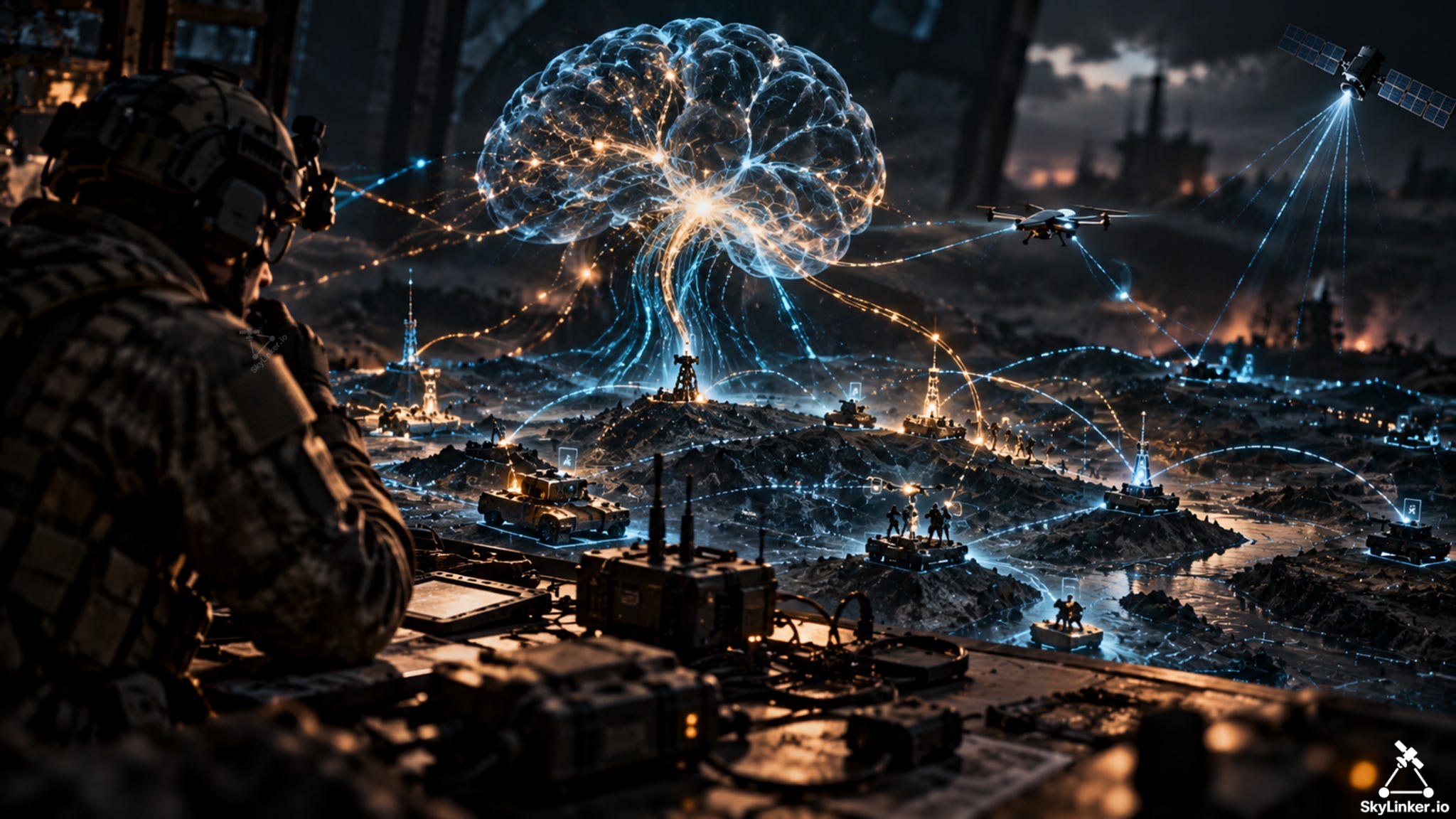
Communications Are Engineering, Not a “Radio”
So it is time to recognise clearly that military communications is resilience engineering. It is architecture — not a “radio”, a “messenger app” or “just Starlink internet”. It is redundancy instead of “it’ll get through somehow”. It is discipline in frequencies, standards and procedures instead of “however it turns out”. It is security, jam resistance (the ability to keep working despite interference and jamming), encryption, planning, testing, cyclical training and rehearsing degradation scenarios — partial loss of communications. It is systems thinking: What happens if one channel “goes down”? How do we keep command and control? How fast do we recover? How do we guarantee delivery of critical data and orders?
Communications today are an almost entirely digital world. That is why communications specialists are not “people who set things up”, but combat command-and-control systems engineers. They must think like doctors of the nervous system: quickly diagnose and isolate “damage”, restore conduction, build bypass routes, keep reserves in place — and never let command and control become paralysed. They need not only tools, but a school: standards, procedures, security, jam resistance, planning for degraded operations, training until it becomes second nature. Such competencies do not arrive together with new equipment — they have to be developed systematically.
On the modern battlefield, communications are first and foremost a network, and only then a radio, a modem or a terminal. The more deeply networking practices are built into units’ communication systems, the more effectively and reliably the entire nervous system of the military organism works. The principles and technologies of network design must become core disciplines in training military communications engineers.
What This Demands of Us
That is why our defence priority is simple and uncompromising: treat communications as a weapon system, not as a “convenience”. Build a network that stays alive under pressure: multiple channels, redundancy, protection, trained personnel, discipline and continuous improvement. For many experienced “old-school” officers, this will mean rethinking familiar approaches. And commanders of the “new era” will also have to build cooperation with the adjacent fields — signals intelligence (SIGINT) and electronic warfare (EW) — in everything “wireless”, because they all operate in the same electromagnetic spectrum.
In the civilian world of IT infrastructure, people realised long ago that resilience is a profession in its own right. Take SRE — Site Reliability Engineering. It is a relatively new field of systems engineering whose main “product” is precisely the resilience of services, systems and communication channels. Much of what has long been everyday practice in SRE — failure contingency plans, regular planned-failure drills (“game days”), blameless post-incident reviews — maps directly onto military communications. Ukraine has many specialists in this field. By drawing on the best SRE practices and methodologies, commanders at every level can radically improve both their approach to providing communications and the resilience of every system on the battlefield.
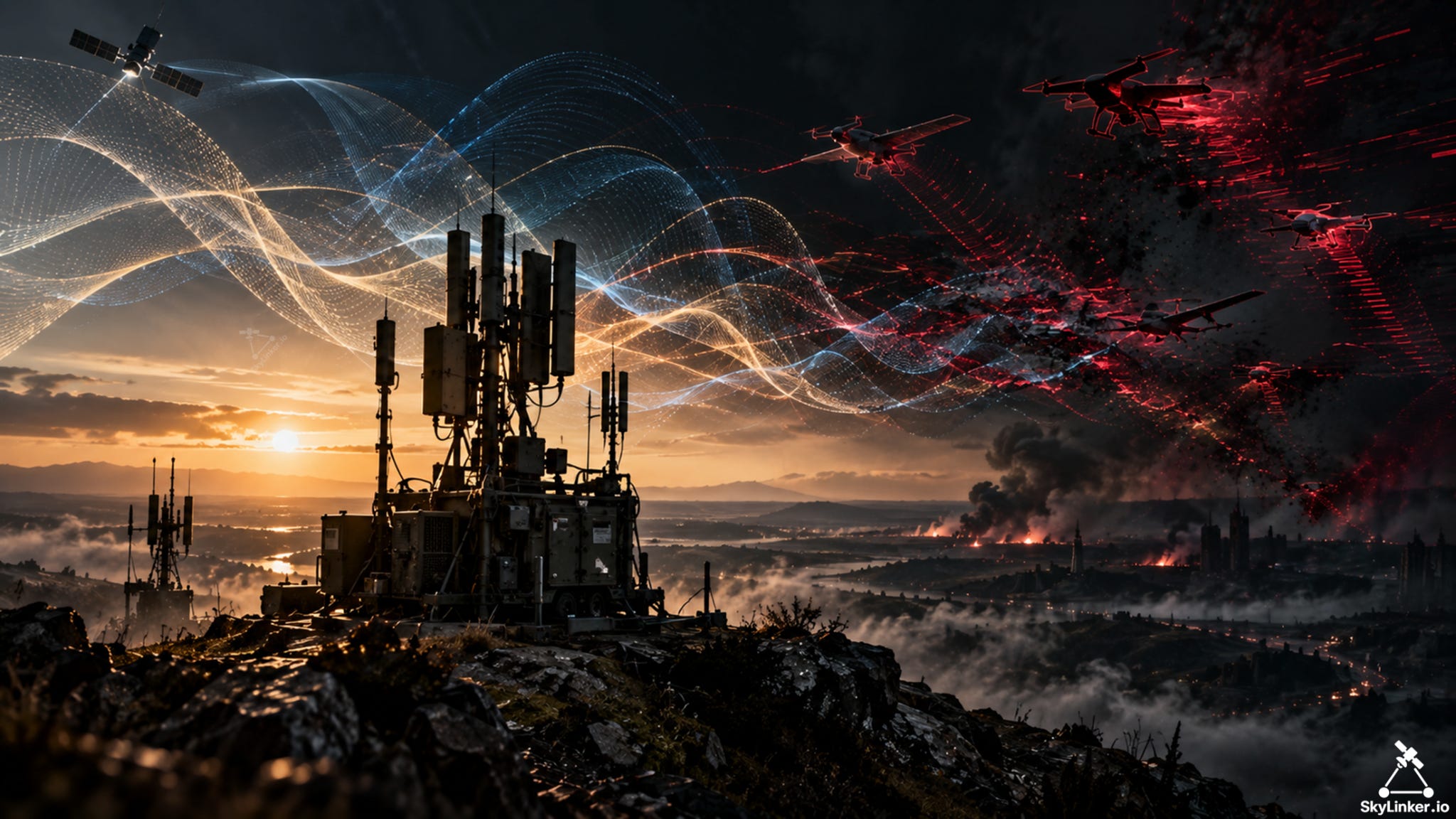
In Lieu of a Conclusion
In this war, communications are no longer a background or a supporting function. They are the nerve that keeps the whole system alive. When it works, defence becomes precise, fast and resilient. When it does not, even strength loses its meaning.
So today our challenge and our duty is to build communications as a critical combat capability: resilient, controllable, scalable, protected and staffed by trained people. To invest in people as much as in equipment. To nurture masters of communications as key defence specialists — the people who keep its nervous system in shape.
Communications are command and control of the battle. They are the speed of victory. They are life. And if we want to win, we must treat communications as a weapon — and treat those who build and maintain them as the specialists without whom this weapon does not fire.
From the author: This publication is a visionary introduction — a prologue to a planned series of articles, training materials and lectures. The vision set out here draws on 4 years of work with modern satellite communications, 12 years of immersion in DefTech, 23 years as an IT trainer and more than 35 years of engineering work in IT infrastructure.
My current goal is to create a body of materials in which every thesis of this publication has a practical follow-up for study and understanding. That is impossible without like-minded people. So this publication is also an invitation to proactive Ukrainian specialists who are inspired by exactly this approach to military communications.
In other words, it is an invitation to collaborate on preparing and publishing high-quality training materials that cover the full fundamental spectrum of military communications technologies. Such publications can offer an initial overview of existing materials or courses, and encourage deeper, higher-quality study.
If you are interested in this kind of collaboration, write to me at volodymyr@stepanets.eu
EW vs. Starlink: What Actually Works?

For the fifth year, we have been observing the battlefield changes brought about by LEO SatCom systems, such as Starlink. The practical use of Starlink by the Ukrainian Defense Forces has not only proven the resilience of such communications but also laid the groundwork for the dawn of the “Drone Warfare Era.”

Verification of Starlink in Ukraine - achievements, shortcomings, conclusions

More than a month has passed since Ukraine implemented regulations that made it possible to deprive the enemy of the ability to use Starlink on the territory of Ukraine. This indeed became a landmark event that influenced the course of military operations.
Starlink Onboard Terminals - Ukrainian Engineering Experience

Starlink satellite terminals are a high-tech system that is actively used in many mobile solutions, including all types of drones (UAV, USV, UGV). Maintaining stable communication while moving is quite a challenging task. Starlink developers not only incorporated the relevant functionality into their system during the development stage. They actually performed a gigantic amount of engineering work. But their high-tech result still has certain features and limitations.
The Wi-Fi Footprint – a little-known yet critical unmasking factor in this war

In modern warfare, Wi-Fi has turned into a major technical unmasking factor. Most users perceive it as an “invisible” and safe interface for connecting to the internet, which is almost always available “under the hood” in many communication devices—from a smartphone or a drone control panel to a satellite terminal (Starlink, OneWeb, SatCube, and others)…